
How to Choose an LED Desk Lamp for a Home Office?
Your home office deserves better than harsh overhead lighting or a dim desk corner. The right LED desk lamp can transform how you work, read, and focus each day.
Poor lighting causes eye strain. It also leads to headaches and afternoon fatigue.
Many people grab any lamp without thinking about brightness, positioning, or light quality. This simple mistake affects comfort and productivity every single day.
This guide covers everything you need to know. You will learn about illuminance levels and why they matter for your specific tasks.
We will explain proper placement techniques to avoid glare on your screen. You will also discover why color temperature and CRI ratings impact your visual comfort.
Desk size and lamp adjustability play a huge role too. We break down clamp versus base options for different workspace setups.
By the end, you will know exactly what features to prioritize. You will feel confident choosing a lamp that fits your home office perfectly.
Let’s find the lighting solution that helps you work smarter, not harder.
In a Nutshell
Choosing the right LED desk lamp comes down to a few key factors. Here is a quick recap to help you decide fast.
-
Check the brightness level. Look for adjustable illuminance so you can match light to your task, whether it’s reading or detailed work.
-
Prioritize adjustability. An adjustable arm or shade lets you angle light toward your keyboard, not your monitor. This simple step prevents annoying glare.
-
Mind your placement. Keep the lamp 12 to 18 inches from your screen edge. Never place it directly above or behind your monitor.
-
Look at light quality specs. Good lamps offer flicker free performance and minimize blue light. Check lumens, color temperature, and CRI ratings too.
-
Match the lamp to your desk. Consider your desk size and choose between a clamp or base style. Stability matters as much as looks.
-
Test before you commit. If possible, try a few models. Your eyes will tell you quickly which one feels right for daily use.
These simple checks help you pick a lamp that truly supports your work, not just your decor.
Why the Right Desk Lamp Matters for Home Office Work
Your home office lighting directly impacts your productivity and comfort. A poor lamp choice leads to eye fatigue, headaches, and reduced focus during long work sessions. The right LED desk lamp eliminates these problems by providing consistent, flicker-free illumination exactly where you need it.
Proper lighting reduces strain on your eyes. When your desk lacks adequate brightness, your eyes work harder to see details. This constant effort causes discomfort and makes concentration difficult. A well-chosen lamp delivers the right amount of light without forcing your eyes to compensate.
Screen glare represents another major issue. Many people place lamps directly above or behind their monitors, which bounces light onto the screen. This glare makes text harder to read and creates reflections that distract you. Strategic lamp positioning prevents this problem entirely.
Light quality matters more than brightness alone. Not all light sources are equal. LED bulbs offer energy efficiency, but the specific color temperature and flicker-free performance determine how well they support your work. Poor quality light can still cause eye strain even at adequate brightness levels.
Your desk layout influences lamp effectiveness too. A lamp that works perfectly on a small surface might overwhelm a large desk, or fail to reach all your work areas. Adjustability becomes essential here. A flexible arm or rotatable shade lets you direct light exactly where you work, whether you’re typing, reading documents, or doing detailed tasks.
The right lamp transforms your workspace. It supports your vision, reduces fatigue, and helps you maintain focus throughout the day. Investing time in selecting the proper desk lamp pays dividends in comfort and work quality.
Understanding Lumens, Color Temperature, and CRI
Lumens measure how bright your lamp actually is. A higher lumen count means more light reaches your desk surface. For home office work, aim for 450 to 900 lumens depending on your tasks and desk size.
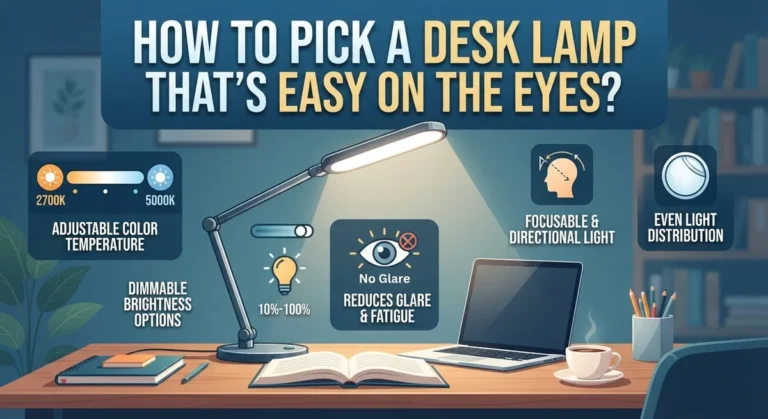
Color temperature describes whether light appears warm or cool. It’s measured in Kelvin (K). Warm light (2700K to 3000K) feels cozy but may cause drowsiness during long work sessions. Cool light (4000K to 6500K) promotes alertness and suits screen-based tasks better. Many people prefer 4000K to 5000K for balanced home office lighting.
CRI stands for Color Rendering Index. This number tells you how accurately colors appear under that light. A CRI of 90 or higher means colors look true to life. This matters if your work involves design, photo editing, or any task where color accuracy counts. Standard office lighting often has lower CRI values, which distorts how you see colors.
These three specs work together. Brightness alone won’t help if the light flickers or casts a sickly tone on your workspace. A lamp with 600 lumens, 4500K color temperature, and 95 CRI outperforms a 1000 lumen lamp with poor color rendering and warm, flickering output.
Check the lamp’s specifications before purchasing. Manufacturers list these details on product pages and packaging. Look for flicker free performance too, since flickering causes eye fatigue even if you don’t consciously notice it. Your lamp should deliver consistent, quality light that supports both your vision and your work accuracy throughout the day.
Core Criteria: Brightness, Adjustability, and Desk Compatibility
Brightness forms the foundation of any good desk lamp. You need enough light to see your work clearly without straining your eyes. Look for lamps that offer adjustable brightness levels so you can dial up the intensity for detailed tasks and dial it down for video calls or less demanding work.
Adjustability goes beyond just brightness control. Your lamp should have a flexible arm or rotating head that lets you position light exactly where you need it. This flexibility prevents you from having to move your entire desk setup when lighting conditions change. A lamp with a swivel base gives you even more positioning options throughout your workday.
Desk compatibility determines whether a lamp actually fits your workspace. Measure your desk surface before shopping. A lamp with a wide base might not work on a small desk, while a clamp mount could be perfect if you have limited surface space. Consider your desk material too. Some desks work better with clamps, while others need a stable weighted base.
The lamp’s arm length matters significantly. A shorter arm works for small desks, but a longer arm gives you more reach to position light over larger work surfaces. Test how the lamp moves. It should stay in position once adjusted without drifting or requiring constant readjustment.
Your desk height also influences lamp selection. Taller desks may need lamps with longer arms to maintain proper positioning. Position your lamp 12 to 18 inches from your screen edge, angled toward your keyboard and work surface rather than directly at your monitor face.
These practical considerations ensure your lamp actually supports your work habits instead of creating new problems.
Ideal Lamp Placement to Avoid Screen Glare
Lamp placement makes or breaks your home office lighting setup. The wrong position causes screen glare, which strains your eyes and kills productivity. The right position eliminates glare while lighting your work surface effectively.
Position your lamp 12 to 18 inches away from your screen edge. This distance keeps light off your monitor while still illuminating your desk. Your lamp should never sit directly above or behind your screen. That placement bounces light straight into your eyes and creates harsh reflections.
Angle your lamp toward your keyboard and desk surface instead. Point the light downward and slightly forward. This approach lights the area where you actually work without hitting your monitor face. You want the lamp’s beam focused on your paperwork, not your screen.
Consider using an adjustable arm or movable shade. These features let you fine tune the angle throughout your day. Your lighting needs change as sunlight shifts or as you switch between tasks. Flexibility prevents you from being locked into one uncomfortable position.
Test your lamp placement before committing to a permanent spot. Sit at your desk and notice where shadows fall. Watch for reflections on your screen. Move the lamp slightly and observe the difference. What works perfectly for one desk setup might not suit another.
Your desk type influences placement options too. A clamp lamp offers different positioning than a base lamp. A clamp gives you more reach but requires a sturdy desk edge. A base stays stable on any surface but takes up desk real estate.
The goal is simple: light your work surface while keeping light off your screen. This balance protects your eyes and keeps you focused on the task ahead.
Step-by-Step Guide to Selecting the Right LED Desk Lamp
Start by measuring your desk space. Determine how much room you have available for a lamp base or clamp. A smaller desk needs a compact lamp, while a larger workspace can accommodate bigger models with extended arms.
Check the lamp’s reach and adjustability features. An adjustable arm lets you move light exactly where you need it. This flexibility prevents you from repositioning your entire lamp when your work changes. Look for models with rotating heads or bendable necks.
Next, identify your desk’s surface type. A solid wooden desk works well with weighted bases. A glass or thin surface might require a clamp lamp for stability. Clamps prevent tipping and save valuable desk real estate.
Consider your monitor setup. If you use a single screen, place the lamp to the side. Dual monitors need careful positioning to avoid casting shadows. Your lamp should illuminate your keyboard and documents without hitting your screen directly.
Brightness level depends on your specific tasks. Detail work like design or writing requires more lumens than general office tasks. Aim for 400 to 1000 lumens for typical desk work. Adjustable brightness settings give you flexibility throughout the day.
Test the lamp’s height adjustment range. Your light source should sit slightly above eye level when you’re seated. This angle reduces glare bouncing toward your face.
Check whether the lamp includes a dimmer or brightness control. This feature lets you adjust light intensity based on daytime hours and task requirements. Evening work often needs lower brightness to reduce eye strain.
Finally, verify that the lamp’s cord length reaches your nearest outlet. A short cord creates safety hazards and limits placement options. Ensure the base or clamp is sturdy enough for your desk type before finalizing your choice.
Clamp vs. Base Mounts: Matching Stability to Your Desk
A clamp mount and a base mount serve different purposes. Your desk type determines which one works best for your setup.
Base mounts sit flat on your desk surface. They take up more horizontal space but offer easy repositioning. You can move them around without any tools. Base mounts work well if you rent your space or change your desk layout often. They’re also ideal if your desk material can’t handle clamps, like glass or very thin surfaces.
Clamp mounts attach directly to your desk edge. They free up valuable workspace since nothing sits on your surface. Clamps grip firmly and stay in place during adjustments. This stability matters when you need precise light angles for detailed work. However, clamps require a desk edge thick enough to secure properly. Most clamps work best on edges between 0.75 and 3 inches thick.
Consider your desk material carefully. Solid wood desks handle clamps excellently. Particle board or hollow desks may struggle with clamping pressure. Glass or laminate surfaces need protective pads under clamps to prevent damage.
Think about your work habits too. If you frequently adjust your lamp position, a clamp’s locked stability prevents accidental shifts. If you like flexibility and quick repositioning, a base mount offers more freedom.
Your desk’s existing setup matters as well. Already crowded with monitors, keyboards, and accessories? A clamp keeps your lamp off the surface. Have plenty of open desk space? A base mount gives you simple, tool free adjustments.
Test both options if possible. Some people prefer the security of a clamp. Others value the simplicity of a base. Your personal workspace needs should guide your final choice.
Common Mistakes When Choosing or Positioning a Desk Lamp
Many people make simple mistakes when choosing or positioning a desk lamp. These errors reduce productivity and create eye strain instead of solving it.
The most common mistake is placing your lamp directly above or behind your monitor. This setup causes harsh glare that bounces off your screen and straight into your eyes. Your screen becomes harder to read, and you end up squinting throughout the day. Move your lamp to the side of your monitor instead.
Another frequent error is ignoring your desk’s actual space. You measure brightness or arm length but forget to check if the lamp physically fits your workspace. A lamp with a long reach might knock into your monitor or block your keyboard area. Always measure your desk dimensions before purchasing.
People often overlook glare management entirely. Positioning matters just as much as the lamp itself. Even a high quality lamp creates problems when angled toward your screen. Position it 12 to 18 inches away from your screen edge and angle it toward your keyboard and work surface.
Many buyers also skip testing flicker and light quality. A cheap lamp might flicker constantly, causing headaches during long work sessions. Check that your lamp offers flicker free performance and stable light output.
Finally, people forget about cord length and outlet placement. Your lamp sits unused if the cord cannot reach a nearby power source. Measure the distance from your desk to the nearest outlet before selection.
The solution is simple: plan before you buy. Measure your space, test placement options, and verify that your lamp actually fits your desk setup. These steps prevent frustration and ensure your lamp actually improves your home office lighting.
Special Considerations for Multi-Purpose or Detailed Work Desks
When your desk serves multiple purposes, your lighting needs shift throughout the day. You might sketch designs in the morning, then switch to computer work in the afternoon. A flexible lamp becomes essential in this scenario.
Adjustable brightness is your best friend for multi-purpose desks. Dimmer controls let you lower light intensity for screen time and increase it for detailed tasks like drawing, crafting, or reading documents. This flexibility prevents eye strain across different activities.
Consider a lamp with an overhead adjustable arm. This design works well because you can redirect light precisely where you need it. When you’re doing detailed work on your desk surface, angle the light downward. When you shift to computer tasks, reposition it to avoid screen glare.
Desk space compatibility matters greatly for multi-purpose workstations. Your lamp should not crowd your workspace. An adjustable arm takes up less surface area than a fixed base. You need room for your keyboard, mouse, papers, and creative materials simultaneously.
Color temperature flexibility helps too. Cooler light (5000K to 6500K) supports focused detail work and screen time. Warmer light (3000K to 4000K) works better for relaxed tasks or evening hours. Some lamps let you switch between settings.
Test your lamp’s full range of motion before purchasing. Move the arm up, down, and sideways. Verify it reaches all corners of your desk. Check that the lamp stays stable when fully extended. A wobbly arm creates frustration during precise work.
For multi-purpose desks, prioritize adjustability over everything else. Your changing needs throughout the day demand a lamp that adapts with you, not against you.
Final Thoughts
Choosing an LED desk lamp does not need to feel complicated. Focus on the basics that matter most for your home office setup.
Illuminance, adjustability, and desk size compatibility form the foundation of a good choice. These three factors work together to create a comfortable workspace.
Remember to check the light quality specs too. Lumens, color temperature, and CRI tell you how the light will actually perform for your tasks.
A flicker free lamp protects your eyes during long work sessions. This matters more than people realize when staring at screens all day.
Blue light minimization helps too, especially if you spend hours in front of a computer. Your eyes will thank you by the end of the workday.
Placement plays a bigger role than most people expect. Keep your lamp about 12 to 18 inches from your screen edge for best results.
Angle the light toward your keyboard and desk surface. Never point it at your monitor face, since this creates glare and eye strain.
Take time to think about your specific work habits. A writer’s needs differ from a designer’s needs, and your lamp should match your daily tasks.
Testing multiple models before buying makes a real difference. What looks good online might not feel right on your actual desk.
Prices for quality LED desk lamps typically range from $50 to $250 or more. Spend based on your actual needs, not just the highest rated option.
In the end, the right lamp supports your comfort and productivity. Take these facts, apply them to your own workspace, and choose wisely.
Frequently Asked Questions
What is the best distance to place a desk lamp from my monitor?
Position your lamp 12 to 18 inches away from your screen’s edge. This distance gives you enough light without creating harsh reflections on your display. Angle the light toward your keyboard and work surface instead of pointing it at the monitor face.
Keep the lamp slightly to the side of your screen. This prevents glare from bouncing directly into your eyes. If you notice reflections on your monitor, move the lamp further to the side or adjust its angle downward.
How do I reduce glare from my desk lamp?
Use an adjustable arm or shade to control where light travels. Point the beam down and away from your screen. A lamp with a directional head gives you more control than a fixed design.
Consider the lamp’s positioning relative to your chair too. Sit at your desk and look at the monitor. If you see bright spots or reflections, reposition the lamp until those disappear.
What light quality specs should I check before buying?
Look for these three measurements: lumens (brightness level), color temperature (warm or cool tone), and CRI or Color Rendering Index (how accurately colors appear).
Choose a flicker-free lamp to protect your eyes during long work sessions. This feature prevents invisible flickering that causes eye strain. Also check if the lamp offers blue light reduction, which helps when you spend hours on computer work.
Can I use the same desk lamp for multiple tasks?
Yes, but adjustable brightness is essential for multi-purpose desks. An overhead adjustable arm lets you direct light for different activities. You might need bright light for detailed work but softer light for video calls.
Test the lamp’s full range of motion before purchasing. Make sure it reaches all areas of your desk without hitting your monitor or other equipment.

DK is the founder and lead writer at Smart Lighting Finds, where he helps readers discover the best lighting products through honest, hands-on reviews and in-depth comparisons. With a deep passion for home improvement and smart technology, DK is dedicated to making every lighting decision easier and brighter for his readers.